Tooth Extraction vs Root Canal: Which Treatment Is Right for You?
- coastalsmiles12
- May 12
- 5 min read
Have you ever had a toothache so painful that even drinking water felt uncomfortable? Many people face this situation and wonder whether they need to save the tooth or remove it completely. In some cases, a Same day root canal can stop the pain and protect your natural tooth, while in other situations extraction may be the better option.
Understanding the difference between these two treatments can help you make the right decision for your smile, comfort, and long-term oral health. Let’s break it down in a simple and realistic way.
Why Do Dentists Recommend Root Canal or Tooth Extraction?
Both procedures are used to treat damaged or infected teeth. The main goal is to remove pain and stop the infection from spreading.
A dentist may recommend treatment if you have:
Severe tooth decay
Cracked or broken teeth
Deep infection inside the tooth
Swollen gums near the tooth
Constant tooth pain or sensitivity
Damage caused by injury or trauma
The right treatment depends on how badly the tooth is damaged and whether it can still be saved.
What Is a Root Canal?
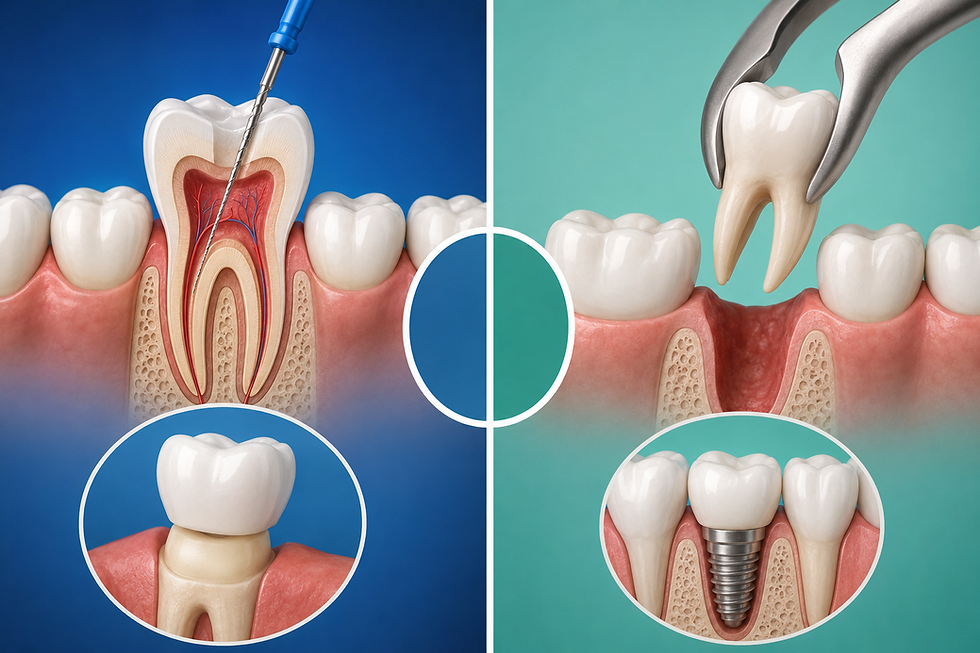
A root canal is a treatment that removes infected tissue from inside the tooth. The dentist cleans the inner area, seals it, and usually protects the tooth with one of the dental crowns used to restore strength and appearance.
Many people think root canals are painful, but modern dentistry has changed that completely. Today, the procedure is much more comfortable and often feels similar to getting a regular filling.
When a Root Canal May Be Recommended
A dentist may suggest this treatment if:
The tooth structure is still healthy enough to save
Infection has reached the inner pulp
You want to keep your natural tooth
There is no major damage below the gum line
Saving your natural tooth is often the first choice because it helps maintain normal chewing and jaw support.
What Is Tooth Extraction?
Tooth extraction means removing the tooth completely from the mouth. This is usually recommended when the tooth cannot be repaired or saved safely.
In emergency situations, many patients choose Same day tooth extraction to quickly relieve pain and prevent infection from worsening.
When Extraction May Be Necessary
A dentist may recommend removing the tooth if:
The tooth is severely broken
Infection is too advanced
There is serious bone loss
The tooth cannot support restoration
Wisdom teeth are causing problems
Crowding affects nearby teeth
Although extraction removes the problem tooth, many patients later need replacement options like implants or bridges to avoid gaps in the smile.
Root Canal vs Tooth Extraction: Key Differences
Here’s a simple comparison to help you understand both treatments more clearly:
Feature | Root Canal | Tooth Extraction |
Main Goal | Save the natural tooth | Remove the damaged tooth |
Pain Relief | Stops infection and pain | Removes the source of pain |
Recovery Time | Usually shorter | May take longer |
Appearance | Keeps your natural smile | Leaves a gap unless replaced |
Chewing Ability | Mostly stays normal | May change temporarily |
Additional Treatment | Crown may be needed | Implant or bridge may be needed |
Long-Term Benefit | Preserves jaw structure | Tooth replacement may be required |
Which Option Is More Painful?
This is one of the biggest questions patients ask.
The truth is that both procedures are done with local anesthesia, so you should not feel pain during treatment. After the procedure, some soreness or discomfort is normal for a few days.
A root canal may feel less invasive because the tooth stays in place. Extraction can involve more healing, especially if the tooth was deeply rooted or infected.
Your dentist may recommend pain management tips such as:
Soft foods for a few days
Cold compress for swelling
Avoiding very hot or hard foods
Taking prescribed medication if needed
Which Treatment Is Better for Long-Term Oral Health?
In many cases, saving the natural tooth is considered the better long-term solution. Natural teeth help maintain jawbone strength and support proper bite alignment.
However, not every tooth can be saved. If the infection or damage is too severe, extraction may prevent future complications.
The best treatment depends on:
Condition of the tooth
Gum health
Bone support
Budget and future dental plans
Overall oral health
A professional dental exam and X-rays can help determine the safest option.
The Role of Dental Crowns After Root Canal Treatment
After a root canal, the treated tooth can become weaker over time. That is why dentists often recommend dental crowns to protect the tooth from cracking.
Crowns act like a protective cap placed over the tooth. They help restore:
Strength
Shape
Appearance
Chewing function
Modern crowns are designed to look natural and blend with your smile, making them a popular option for restoring treated teeth.
Signs You Should See a Dentist Immediately
Ignoring tooth pain can make the problem worse. You should schedule a dental visit if you notice:
Sharp or throbbing tooth pain
Swelling around the gums
Pain while chewing
Tooth discoloration
Sensitivity that does not go away
A bad taste in the mouth
Fever linked to tooth pain
Quick treatment can often prevent more serious dental issues later.
How to Decide Between the Two Treatments
Choosing between a root canal and extraction is not always easy. Some people want the fastest solution, while others prefer to save their natural tooth whenever possible.
Here are a few questions that may help:
Can the tooth still be repaired?
Will saving the tooth last long-term?
Is there severe infection or bone loss?
Are replacement options affordable if the tooth is removed?
What does your dentist recommend after examination?
Every patient is different, so treatment should always be personalized.
Conclusion
Tooth pain can seriously affect your daily life, but the good news is that modern dentistry offers effective solutions. Whether you need to save a damaged tooth or remove it safely, the right treatment can restore comfort and protect your oral health.
In many situations, root canals help preserve your natural smile, while extractions may be the better choice for severely damaged teeth. The key is getting professional advice before the problem becomes worse.
At Coastal Smiles Family Dentistry, patients receive personalized care based on their specific dental needs and long-term oral health goals. Early treatment can make a huge difference in protecting your smile and avoiding future complications.
Frequently Asked Questions
Is a root canal better than extraction?
In many cases, saving the natural tooth is preferred because it maintains normal chewing and jaw support. However, extraction may be necessary if the tooth cannot be repaired.
How long does recovery take after tooth extraction?
Most patients recover within a few days, although healing can vary depending on the complexity of the extraction.
Do root canals hurt?
Modern root canal procedures are usually comfortable due to local anesthesia and advanced dental techniques.
Why are crowns needed after a root canal?
Crowns help strengthen and protect the treated tooth from breaking or damage.
Can I eat normally after treatment?
Soft foods are usually recommended for the first few days after either procedure. Most people return to normal eating once healing improves.


Comments